

Research
Our Research Approach
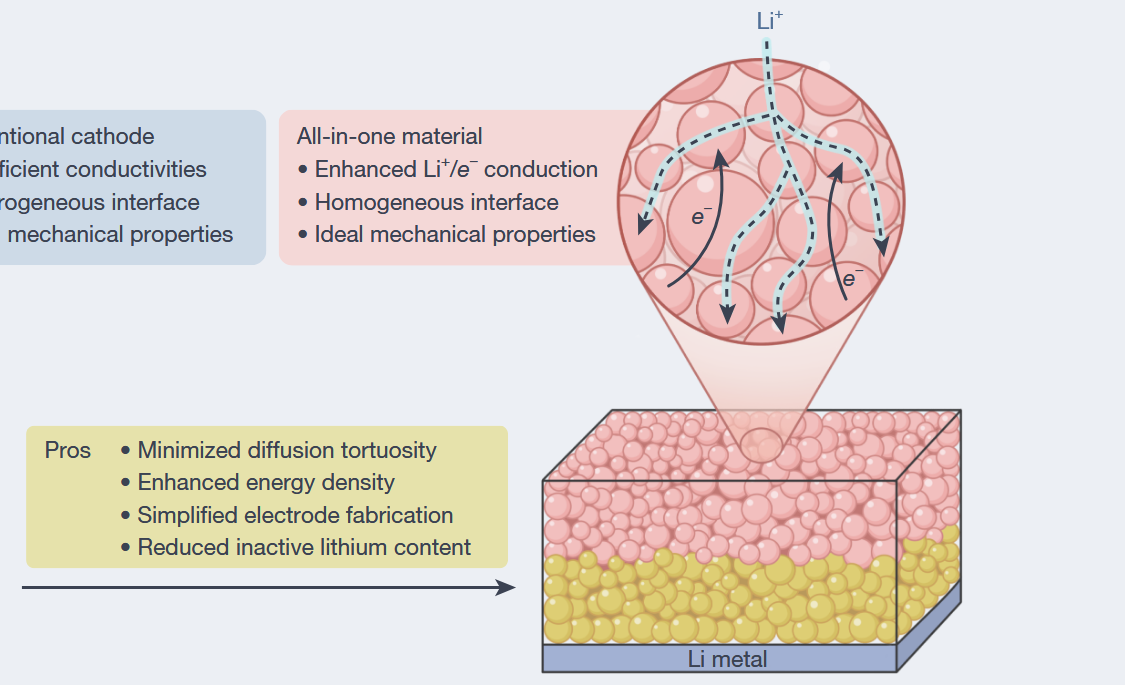
We study integrated energy storage materials and devices. Our work examines electronic structure, electron and ion transport, and mechanical behavior, asking how these properties can work together to perform multiple functions within a battery. By reducing inactive components and heterogeneous interfaces in composite electrodes, we aim to improve transport and contact in solid-state batteries.
Using halide materials and all-solid-state batteries as a foundation, we develop electrochemical long-duration storage and 3D-printed flexible batteries. Electrochemical testing, synchrotron characterization and data analysis help us track structural changes during operation and connect composition and structure with reaction mechanisms and performance. Our research spans materials synthesis, reaction mechanisms, electrode architecture and device validation, with a focus on safety, cost, energy efficiency, cycle life and manufacturability.
High-Safety Halide Cathodes and Integrated Electrodes
Halides offer considerable scope for tuning composition and electronic structure, providing new options for reducing oxygen-release risks at high voltages. We investigate cation and anion redox, multi-electron reactions, mixed ionic–electronic conduction and structural changes during cycling. At the electrode level, we develop integrated cathode–electrolyte materials in which the active material supports both energy storage and ion and electron transport. This approach can reduce the fraction of inactive components, such as conductive additives and solid electrolytes, while improving particle contact and mechanical stability during cycling. These materials underpin long-duration storage, all-solid-state batteries and specialized power sources with demanding safety requirements.
Electrochemical Long-Duration Energy Storage
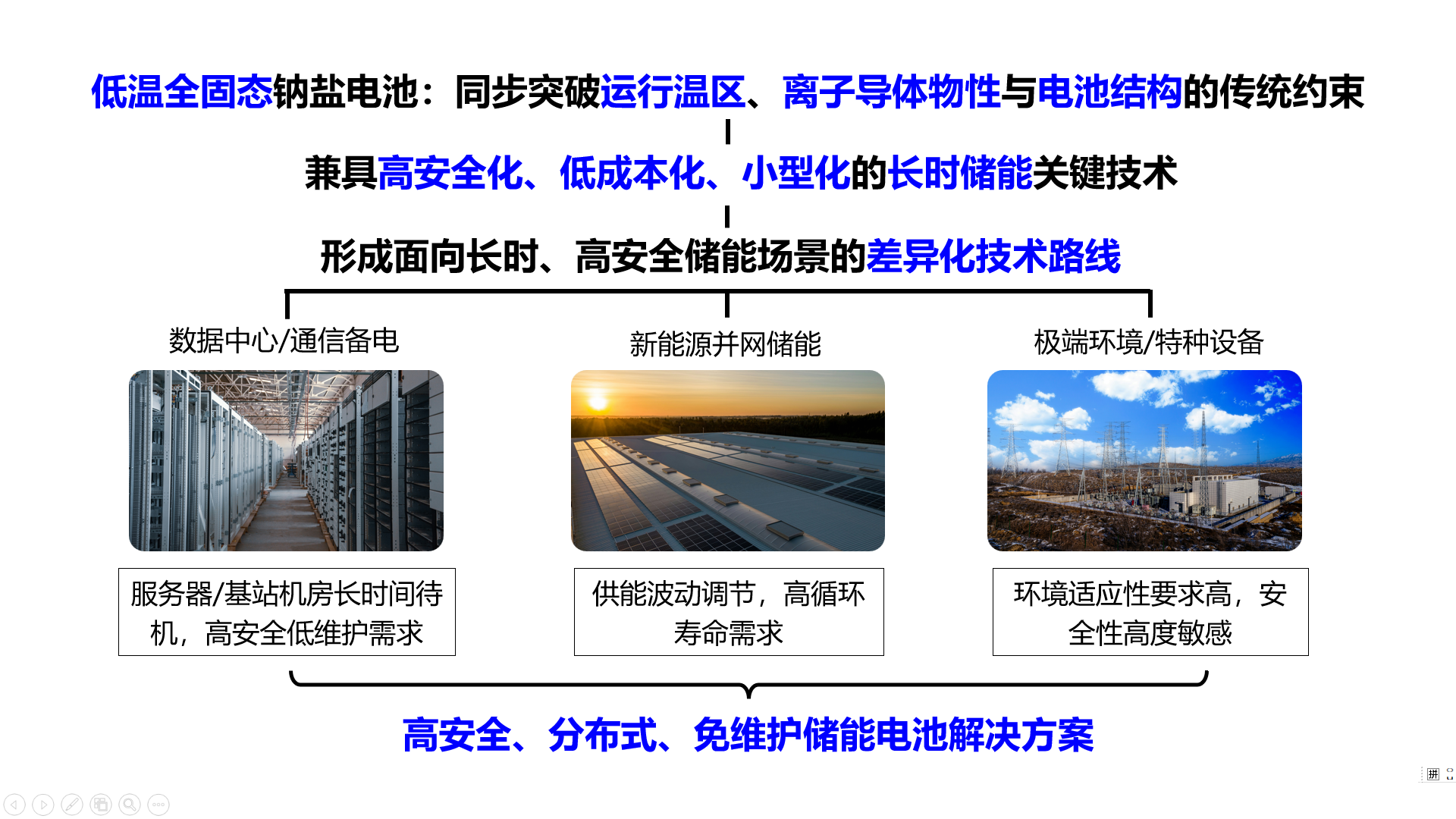
Long-duration batteries must maintain high energy efficiency through extended discharge, deep cycling and prolonged storage, while limiting cost, operating risks and degradation. We use earth-abundant elements and low-cost halides to develop cathode materials, electrode architectures and battery systems for stationary long-duration storage. Key priorities include multi-electron reactions, low self-discharge, stable interfaces, operation across a broad temperature range and safety. We assess storage duration, round-trip efficiency, calendar life, lifetime energy throughput and cost per unit of delivered energy. Active-material loading, electrode thickness, electrolyte use and manufacturing processes are considered throughout, supporting renewable energy integration and stationary storage.
3D Printing and Flexible Energy Storage
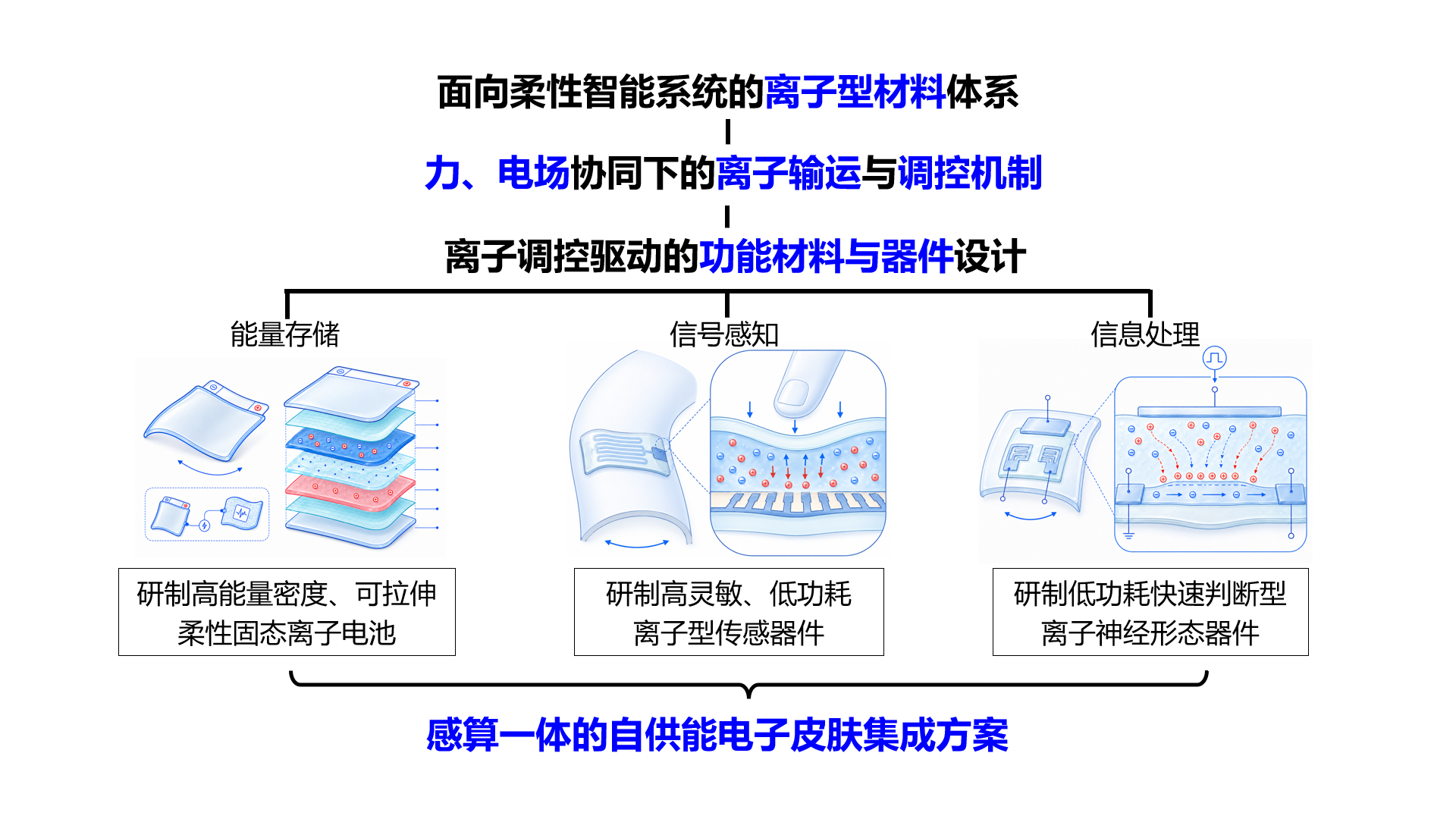
3D printing expands the design space for battery geometry and manufacturing. We use printing to control electrode thickness, pore architecture, active-material distribution and stress relief, alongside work on printable electrode and electrolyte inks, low-temperature curing, interlayer contact and printing precision. Our flexible-device research examines electrochemical stability under bending, stretching and repeated deformation. Device formats include thin-film, fiber, textile and on-skin batteries. We co-design mechanical properties, interfaces and device structures, and explore integration with load-bearing, sensing and body-conforming structures for wearables, flexible electronics and specialized equipment.
Shared Methods: AI-Assisted Analysis and Synchrotron Characterization
Synchrotron characterization and data analysis support all of our research. X-ray absorption spectroscopy, diffraction and related techniques reveal changes in oxidation state, local structure and phases during battery cycling. We use machine learning for batch spectral processing, state identification, reaction-pathway extraction and structure–property analysis. Integrating electrochemical, structural and compositional data helps identify key variables and guide subsequent experiments.